
Breast Reconstruction Surgery in Baton Rouge, LA
If you have been diagnosed with breast cancer, know that there are a number of reconstructive options available to you. Dr. Chiasson will explain these options to you, listen carefully to your questions and concerns, and work closely with your breast surgeon to create a reconstructive plan specifically for you.
A breast cancer diagnosis brings enough to think about. Deciding what comes next for your body shouldn't add to the weight of it. Dr. Chiasson has a special interest in breast reconstruction, has presented on the subject at national meetings, and has published on it as well. More than any technique, though, she values the relationship with you as her patient, and she believes there is no one-size-fits-all approach. Your plan will be built around you: your diagnosis, your body, your treatment, and your goals.
Understanding Your Options
Breast reconstruction generally follows one of two paths. Implant-based reconstruction uses a breast implant to recreate the shape of the breast. Flap reconstruction, also called autologous reconstruction, uses your own tissue from another area of your body. Some women are candidates for one path, some for both, and factors like breast size, whether radiation is part of your treatment, and your own preferences all help guide the decision. During your consultation, Dr. Chiasson will walk you through each option that fits your situation so you can move forward feeling informed and confident.
Oncoplastic Reconstruction
Oncoplastics is a term that encompasses many different reconstructive procedures that may be utilized to correct the defect created from a partial mastectomy or lumpectomy. This involves preserving most of your own breast tissue and is also known as breast conservation therapy.
Women who chose to conserve their own breast (instead of a mastectomy) will need radiation after their cancer has been resected, but they may benefit from oncoplastic reconstruction. This involves rearranging local tissue from the breast or chest in a way that helps re-create your native breast shape and size. It may also involve a procedure on your non-cancerous breast for symmetry, such as a breast lift or reduction.
Dr. Chiasson and your breast oncologic surgeon will consult with you to determine if you are a good candidate for oncoplastic surgery.

Left breast cancer treated with lumpectomy and oncoplastic reconstruction and right breast mastopexy for symmetry. Patient is shown ~2 years after surgery and radiation to the left breast.

Right breast cancer treated with lumpectomy and oncoplastic reconstruction and a left breast mastopexy for symmetry. Patient is shown ~6 weeks after surgery.
Direct to Implant
For some women undergoing a mastectomy, placing a breast implant during the same surgery may be an option. This technique is best suited for women with smaller breasts who will not need radiation after the mastectomy. The breast implant is typically placed on top of your pectoralis muscle and may be wrapped in a material called acellular dermal matrix for soft tissue support. Sometimes this procedure is combined with autologous fat grafting in a second surgery. Consultation with Dr. Chiasson and your breast oncologic surgeon will help determine if this is an option for you.
Depending on your anatomy, the implant may be positioned above or beneath the chest muscle. When it's placed above the muscle and supported with acellular dermal matrix, recovery is often quicker since the muscle isn't lifted, and the implant moves more naturally. When it's placed partly beneath the muscle, dermal matrix along the lower breast helps create a soft, rounded shape, and small drains are common for a short time afterward. Both approaches are single-stage, meaning the breast shape is created in one surgery. Dr. Chiasson will help you understand which is the better fit for you.
Tissue Expander and Implant Breast Reconstruction
The most common method of post-mastectomy breast reconstruction in the United States is a two-staged procedure. At the time of the mastectomy, a tissue expander is placed. It is usually wrapped in a material called acellular dermal matrix. Over the next few months, the expander is filled with saline. The saline addition is done in the office and is quick and painless. After the desired size has been reached a second surgery is done in which the expander is removed and a final permanent implant is placed. The final implant is silicone gel. Fat grafting may also be done to enhance the overall result if needed.
The expansion itself happens gradually and comfortably. At your office visits, a small amount of saline is added through a port using a fine needle, usually on a weekly schedule and always at a pace your body tolerates well. Once you reach your goal size, there's a short resting period where no volume is added, giving your skin and muscle time to relax before your final implant is placed. This unhurried approach is part of what makes the two-stage method so reliable and widely used.
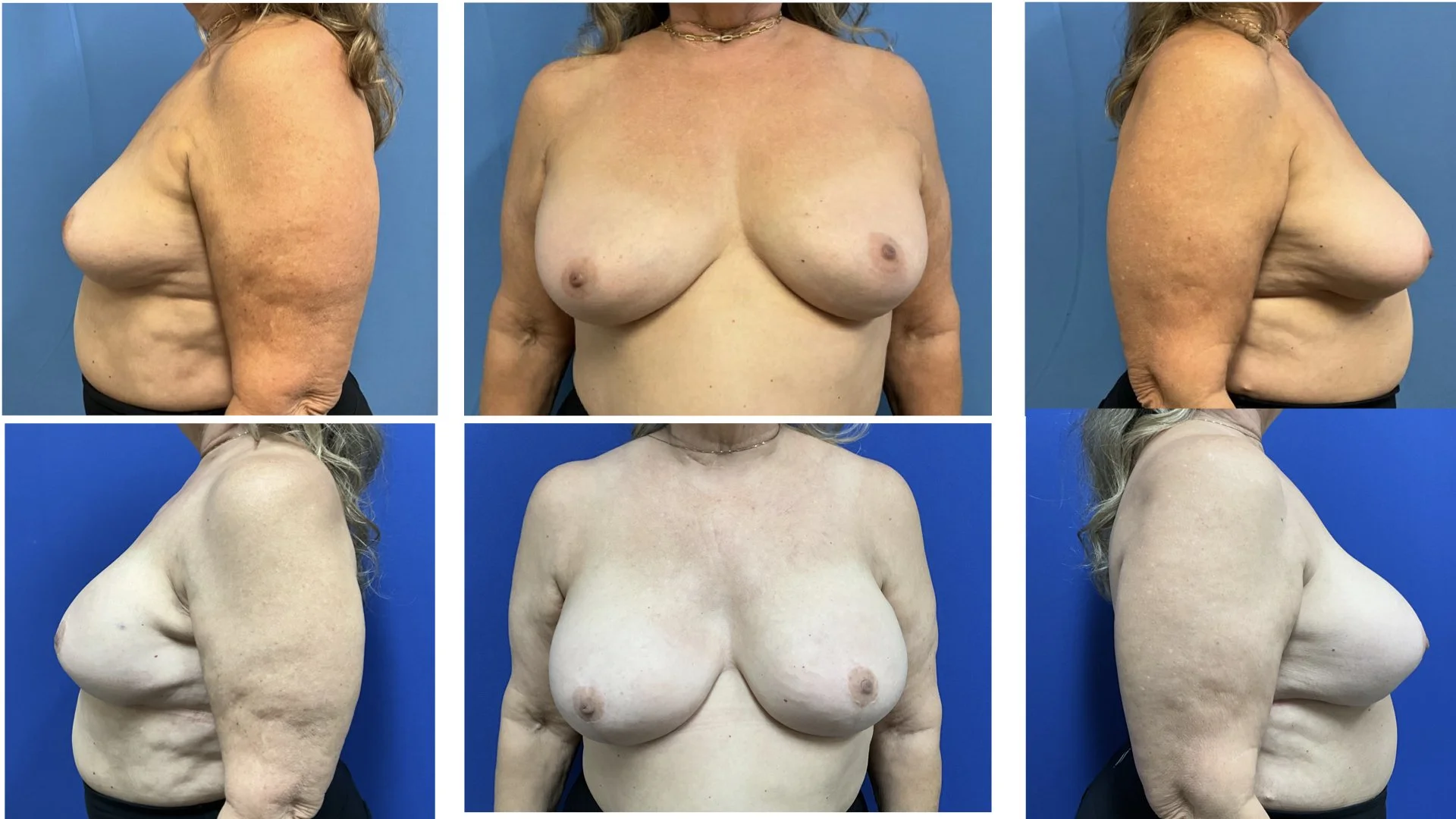
After bilateral nipple sparing mastectomy and two staged reconstruction with expanders and implants.

After bilateral skin sparing mastectomy and two staged reconstruction with expanders and implants.
Latissimus Flap
The breast may be reconstructed by transferring skin and muscle (the latissimus dorsi) from the back. The latissimus is a large, flat muscle that provides excellent coverage of an implant. It is a good choice if the mastectomy skin flaps may not be healthy such as in patients who smoke or who have had prior chest wall radiation. The back scar can be placed in the bra line and the loss of the muscle does not result in a physical deficit.
Because this flap brings its own healthy blood supply and new skin to the chest, it's an especially strong option for women who have already had radiation, which can limit other approaches. It's also a good choice for very thin patients with fewer flap options elsewhere. An implant or an adjustable expander is usually placed behind the flap to build breast volume.

Patient with recurrent right breast cancer underwent bilateral mastectomies and reconstruction with bilateral latissimus flaps and implants. Nipple reconstruction and tattooing also done.
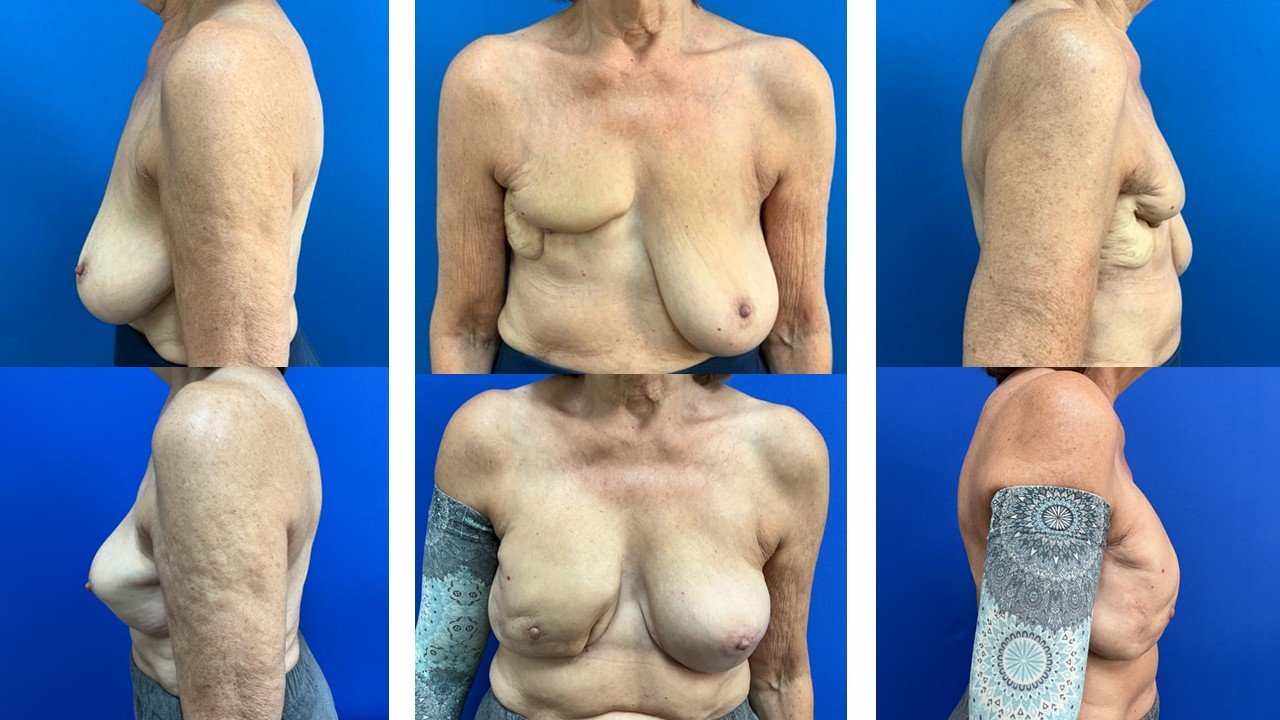
Patient with right nipple sparing mastectomy and delayed reconstruction using a right latissimus flap and implant and a left mastopexy for symmetry.
DIEP Flap
The DIEP (deep inferior epigastric) flap uses abdominal tissue that is transferred to the chest as a free flap to recreate a breast mound with just skin and fat. It is a complex operation but one that can create a breast with your own tissue, usually avoiding the need for an implant. The DIEP flap prevents sacrificing the abdominal muscles as was previously the case in TRAM (transverse rectus abdominus musculocutaneous) flaps.
The DIEP flap uses the same lower-abdominal skin and fat as the older TRAM flaps, but it spares the rectus (six-pack) muscle. Instead of removing muscle, the small blood vessels that supply the tissue are carefully separated and then reconnected to vessels in the chest using microsurgery. Because the muscle is preserved, there's a lower risk of abdominal weakness or hernia and generally less discomfort afterward. The scar sits low on the abdomen, similar to a tummy-tuck line, and many women appreciate that the result is created entirely from their own tissue.
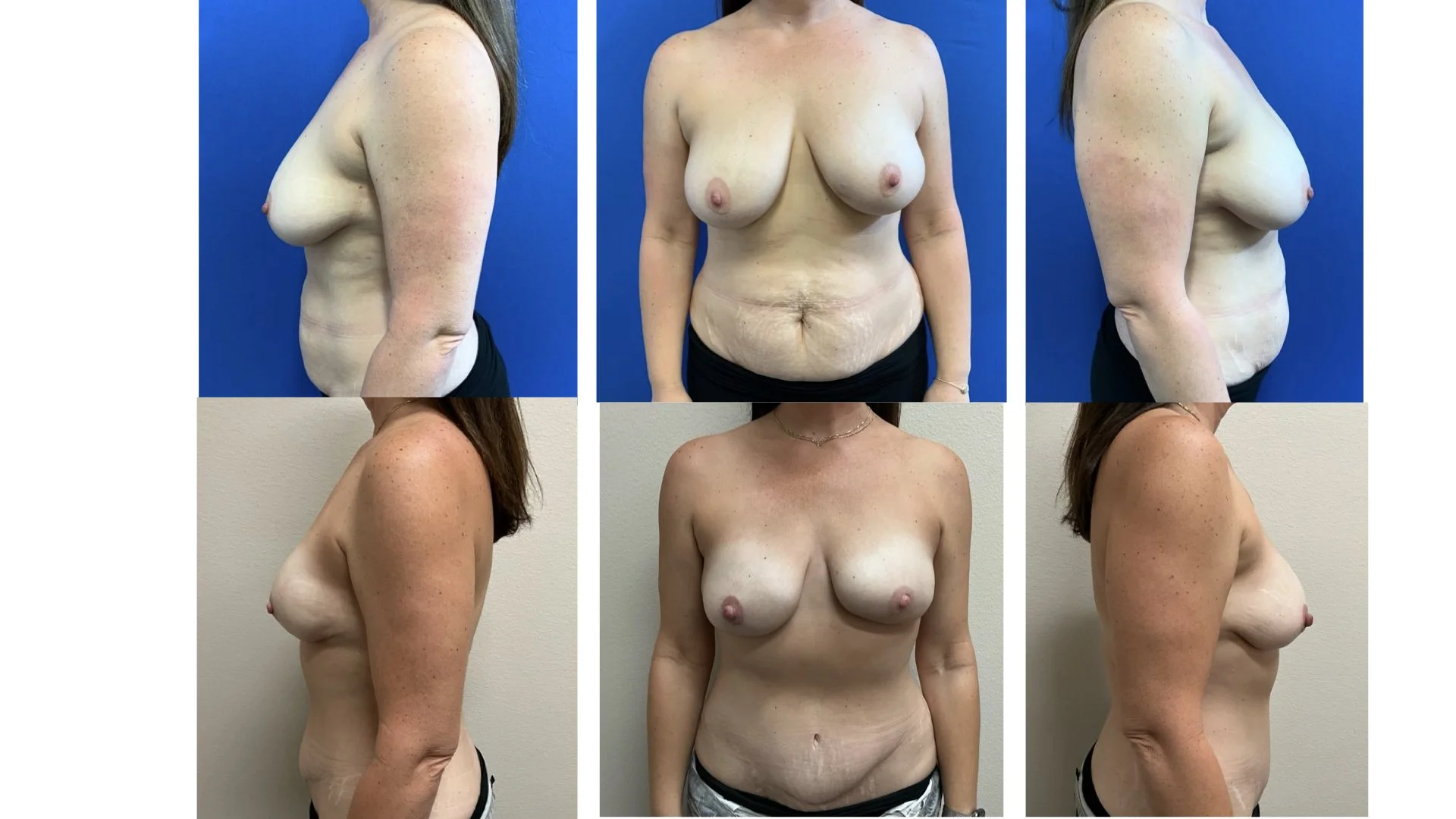
Bilateral nipple sparing mastectomies and DIEP flap reconstruction following left breast cancer with radiation.
Other Tissue Flap Options
Not every woman is a candidate for abdominal-based reconstruction, and that's perfectly okay. When the abdomen isn't the right source, your own tissue can often be used from other areas instead. Dr. Chiasson will talk through which of these fits your anatomy and goals.
Other abdominal-based flaps. Alongside the DIEP, a few related flaps also use lower-abdominal skin and fat, differing mainly in how much muscle is involved. The TRAM flap uses the rectus muscle to carry its blood supply, while the free TRAM removes only a portion of muscle and reconnects the vessels in the chest with microsurgery. The SIEA flap uses the same abdominal tissue but relies on blood vessels that run through the fat rather than the muscle, sparing the abdominal wall entirely. Because those vessels aren't present or large enough in every woman, the SIEA is performed less often than the DIEP or free TRAM.
Thigh-based flaps. For women with small-to-medium volume breasts, tissue from the upper thigh can be a good source. Gracilis-based flaps (referred to as TUG, VUG, or DUG depending on the direction of the incision) use skin, fat, and a small amount of muscle from the upper inner thigh, with scars usually tucked into the natural crease. The PAP flap uses skin and fat from the back of the upper thigh and is muscle-sparing, with the scar hidden in the fold beneath the buttock. These flaps also tend to leave the inner thigh a bit tighter, similar to a thigh lift.
Gluteal-based flaps. Tissue from the buttock can also be used through the SGAP (upper buttock) or IGAP (lower buttock) flaps. Both are muscle-sparing, and the scars are typically placed to be concealed.
All of these are microsurgical procedures, so blood flow to the flap is closely monitored in the hospital for a few days after surgery, and in rare cases a second procedure is needed to check circulation. Dr. Chiasson will walk you through the trade-offs of each so you understand exactly what to expect, including recovery at the donor site.
Breast Reconstruction Client Testimonials
Preparing for Surgery
Once your plan is in place, a few simple steps in the weeks beforehand can make a real difference in how well you heal. The most important is to stop smoking, since smoking reduces circulation to the skin and slows healing. You'll need to be completely nicotine-free, including gum, patches, and e-cigarettes, for at least one month before surgery. Dr. Chiasson also recommends starting a daily multivitamin and Vitamin C to support healing, and avoiding aspirin, ibuprofen, and Vitamin E in the weeks leading up to your procedure, as these can increase bleeding (always check with your prescribing doctor before stopping any medication). Our office can also provide medications that help reduce bruising and swelling, along with a medical-grade scar treatment to use once your incisions have healed.
As your surgery date approaches, you'll fill your prescriptions ahead of time, follow simple instructions the day before and the morning of, and our team will confirm your arrival time with you. We'll give you a complete checklist so nothing feels uncertain—and you're always welcome to call us with any question, big or small.
For full details, download our PREPARING FOR SURGERY guide.
Where Your Surgery Takes Place
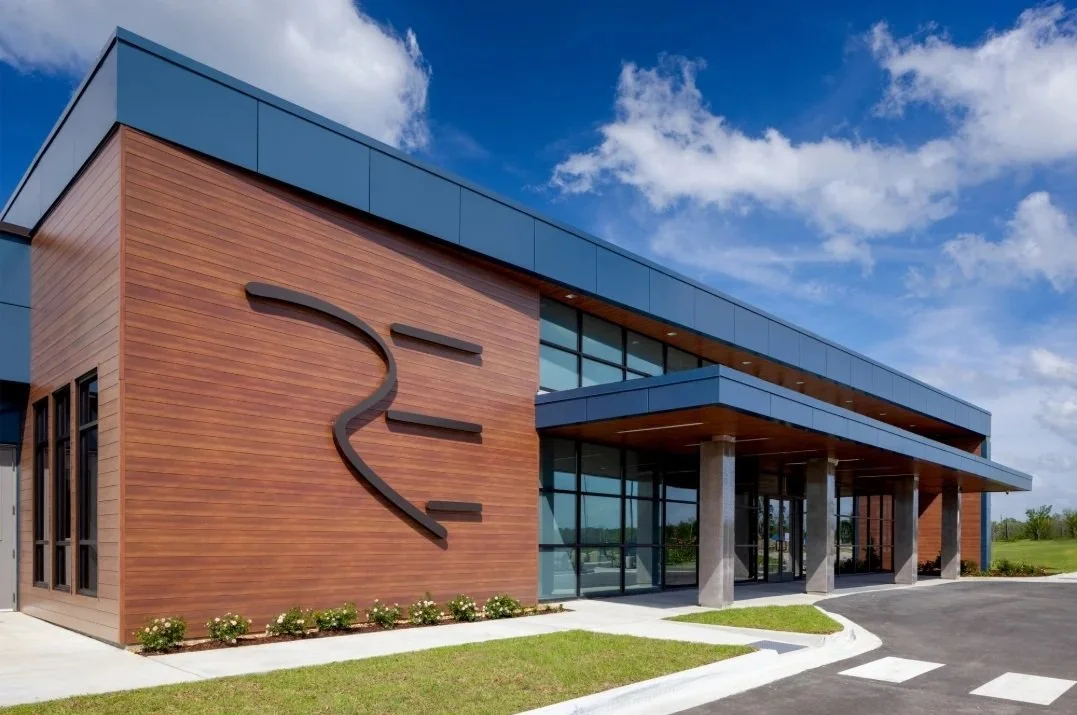
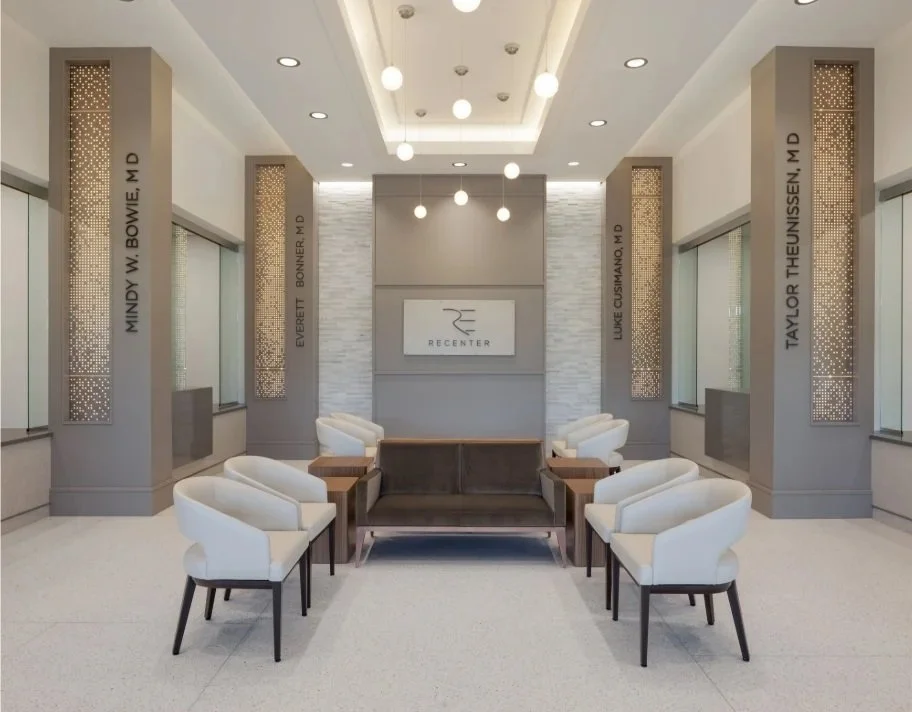
Dr. Chiasson performs her breast surgery and reconstruction at the ReCenter, a surgical hospital in Baton Rouge thoughtfully designed around comfort, privacy, and exceptional, whole-person care. Rather than the sterile, high-stress feel of a traditional hospital, the ReCenter offers a warm, homelike environment created specifically to ease anxiety and support healing—an approach that fits perfectly with how Dr. Chiasson believes patients deserve to be cared for.
The facility pairs advanced surgical technology with a calm, nature-inspired setting, and its team is dedicated to a patient-first, shared decision-making philosophy where your treatment plan is built around you. Research consistently shows that the right environment can accelerate recovery, and the ReCenter was purpose-built with that principle in mind: blending holistic, evidence-based care with the goal of restoring not just your health, but your confidence and quality of life. From the moment you arrive until the day you go home, you'll be surrounded by a team focused on making your experience as comfortable and reassuring as possible.
You can learn more about the facility at recenterhospital.com.
Ask The Expert
Dr. Kate Chaisson

-
This is one of the first things I like to talk through with my patients, because you have more flexibility than you might expect. We can do reconstruction immediately, during the same surgery as your mastectomy, or we can wait until after your cancer treatment is complete. What's right for you depends on your diagnosis, whether radiation is part of your plan, and honestly, what feels right to you. I work hand in hand with your breast surgeon so we're making this decision together, with you at the center of it.
-
It can, and it's something I'll always factor in when we talk through your plan. Radiation can make certain implant-based options less ideal, and in those cases a tissue flap, like a latissimus or DIEP, is often a stronger choice because it brings healthy new tissue and its own blood supply to the area. I'll walk you through how your specific treatment plan shapes the recommendation, so nothing feels like a surprise.
-
It really depends on the approach we choose together. Some women are candidates for direct-to-implant reconstruction, which is done in a single stage, while the most common method, tissue expander to implant, takes two. Sometimes I'll also add fat grafting or a symmetry procedure on the other breast later on to refine the final result.
-
In most cases, yes. Federal law requires most insurance plans that cover mastectomy to also cover breast reconstruction, including procedures on the opposite breast for symmetry. I know insurance can feel overwhelming on top of everything else you're navigating, so my team is always glad to help you understand your specific coverage.
-
The best first step is simply to come in for a consultation. I'll take the time to review your options, answer every question you have, and build a plan around your goals.

Start Your Breast Reconstruction Journey
With a special interest in breast reconstruction and a deeply personal approach to care, Dr. Chiasson and the Ford team are here to guide you through every step